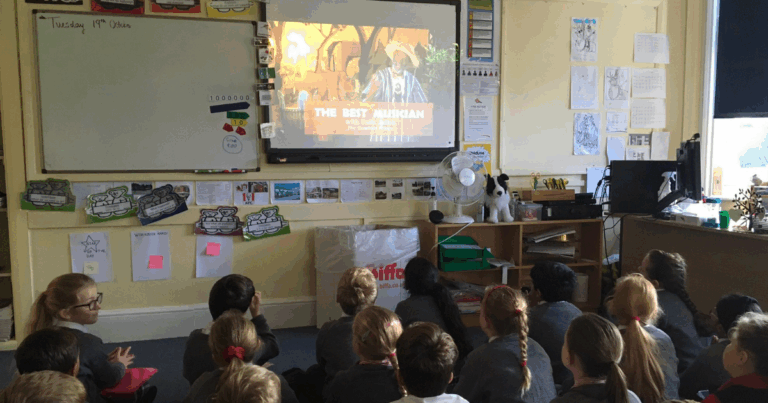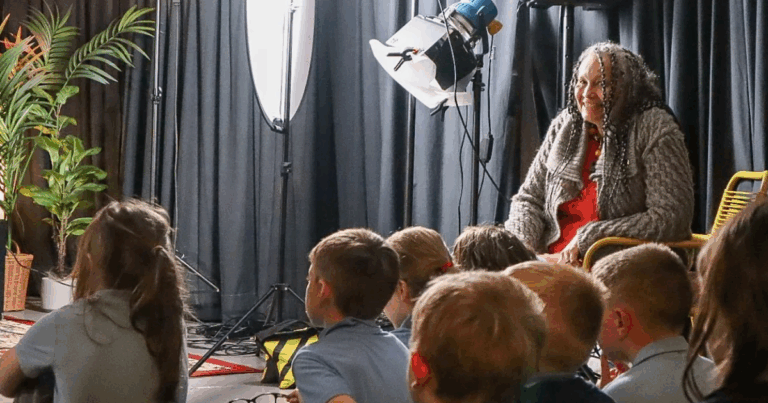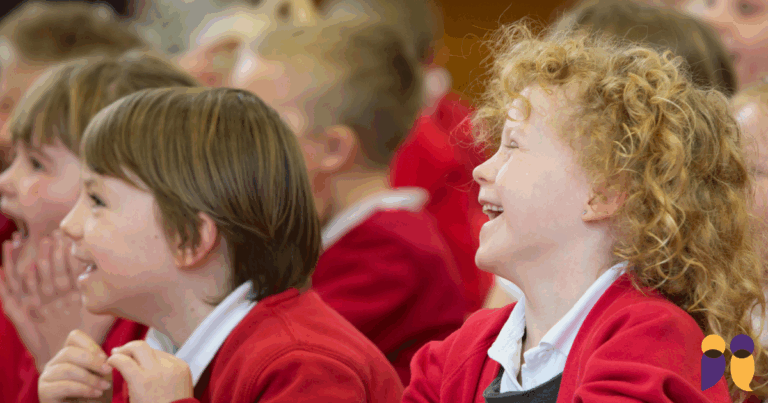


Across the UK, teachers are increasingly being asked to support children’s emotional wellbeing alongside academic progress. In this context, storytelling in primary schools is not an optional extra. It is one of the most effective, low-pressure ways to support learning, regulation and connection at the same time.
At Settle Stories, this belief underpins Stories for Schools. Storytelling works because it meets children where they are emotionally and cognitively, while fitting realistically into busy school days.
Storytelling in primary schools and emotional wellbeing
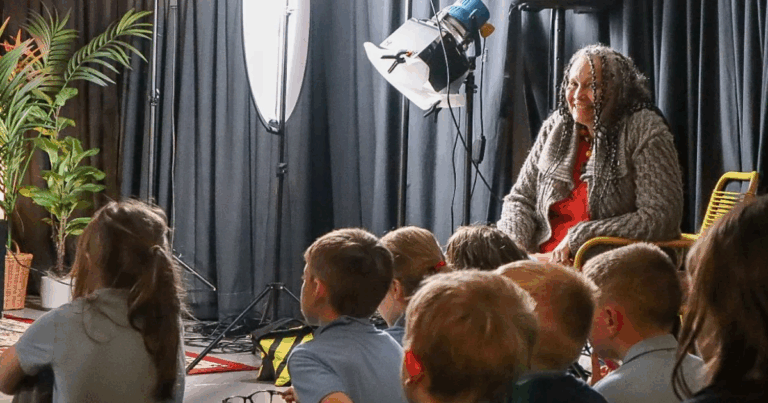
When children listen to stories, they enter a shared imaginative space where emotions can be explored safely. Difficult feelings such as fear, anger, loss or uncertainty are experienced through characters, rather than directly.
This is why storytelling in primary schools is so effective for wellbeing. It allows children to recognise emotions, build empathy and develop resilience without being put on the spot. Story reassures children that struggle is part of life and that change is possible.
In classrooms where anxiety and emotional dysregulation are becoming more common, storytelling offers calm, structure and reassurance without demanding disclosure or explanation.
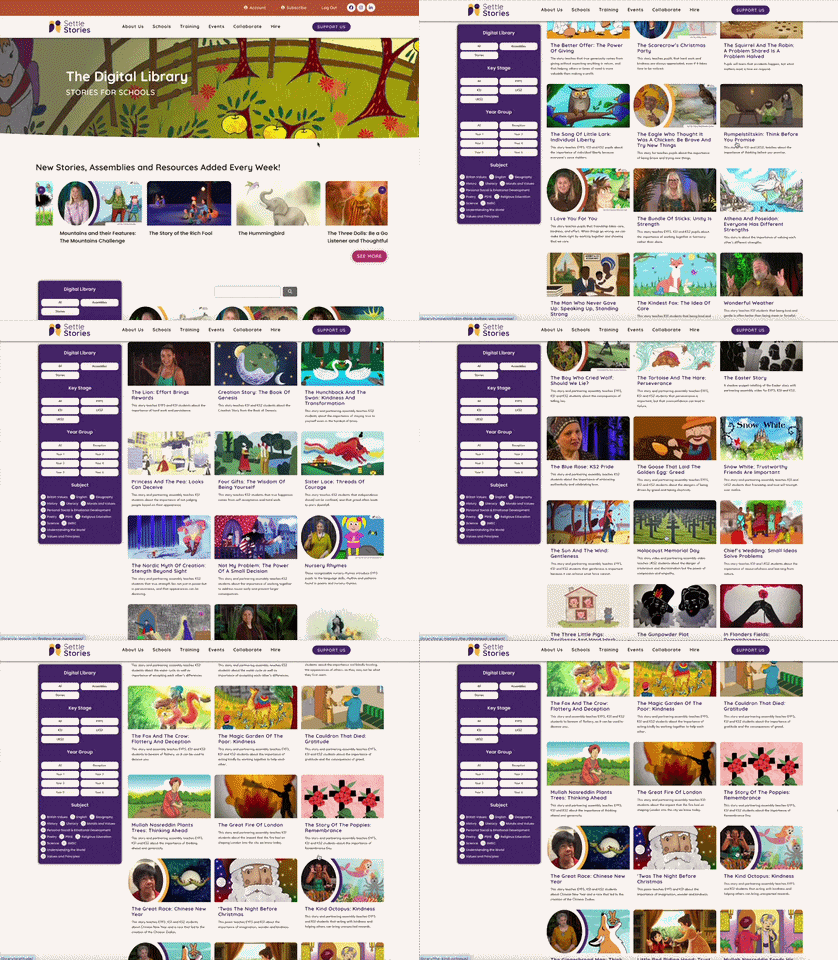
You can explore and sign up to Stories for Schools for stories designed to support wellbeing through storytelling in primary schools here.
Storytelling in primary schools as a learning tool
From a learning perspective, storytelling in primary schools is equally powerful. Children remember stories far more effectively than disconnected facts because narrative creates meaning.
Story-based learning supports:
- vocabulary development
- listening and attention
- comprehension and recall
- discussion and oracy
Story also provides a natural bridge into the curriculum. Teachers regularly use storytelling in primary schools to introduce writing, history, geography, RE, science and PSHE in a way that feels joined-up rather than fragmented.
Learning becomes something children enter, rather than something delivered to them.
Stories for Schools offers access curriculum-linked storytelling in primary schools for a small annual fee. You can find out more here.

Low-load teaching through storytelling in primary schools
One of the greatest strengths of storytelling in primary schools is how little it asks of teachers. A story can be shared without worksheets, marking or complex differentiation. It works across mixed abilities and creates a collective classroom experience.
On days when energy is low or time is tight, storytelling offers learning without overload. It slows the pace while keeping purpose, supporting behaviour and focus through connection rather than control.
Stories for Schools has been designed to reflect this reality. The resources are flexible, ready to use and supportive of teacher wellbeing as well as pupil wellbeing.
If you are looking for calm, low-prep storytelling in primary schools, check out Stories for Schools.
Storytelling in primary schools as shared language
When a class hears the same story, they gain shared references and emotional touchpoints. Over time, storytelling in primary schools creates a common language that teachers can return to during reflection, discussion or restorative conversations.
Stories allow children to talk about big ideas through characters, supporting inclusion, empathy and belonging. These shared narratives quietly shape classroom culture and strengthen relationships.
You can sign up to Stories for Schools today to embed shared storytelling in primary schools.

Why Stories for Schools?
Stories for Schools brings together high-quality storytelling, curriculum relevance and a wellbeing-aware approach grounded in real classroom practice. It supports teachers who want meaningful resources that work for both learning and wellbeing.
Story has always helped us understand the world. Today, storytelling in primary schools also helps children feel calmer, safer and more ready to learn.
If you are looking for a gentle, effective way to support wellbeing and learning, explore and sign up to Stories for Schools today.