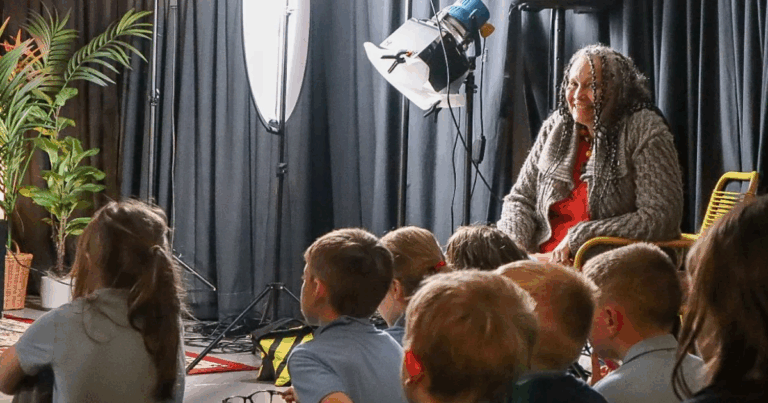


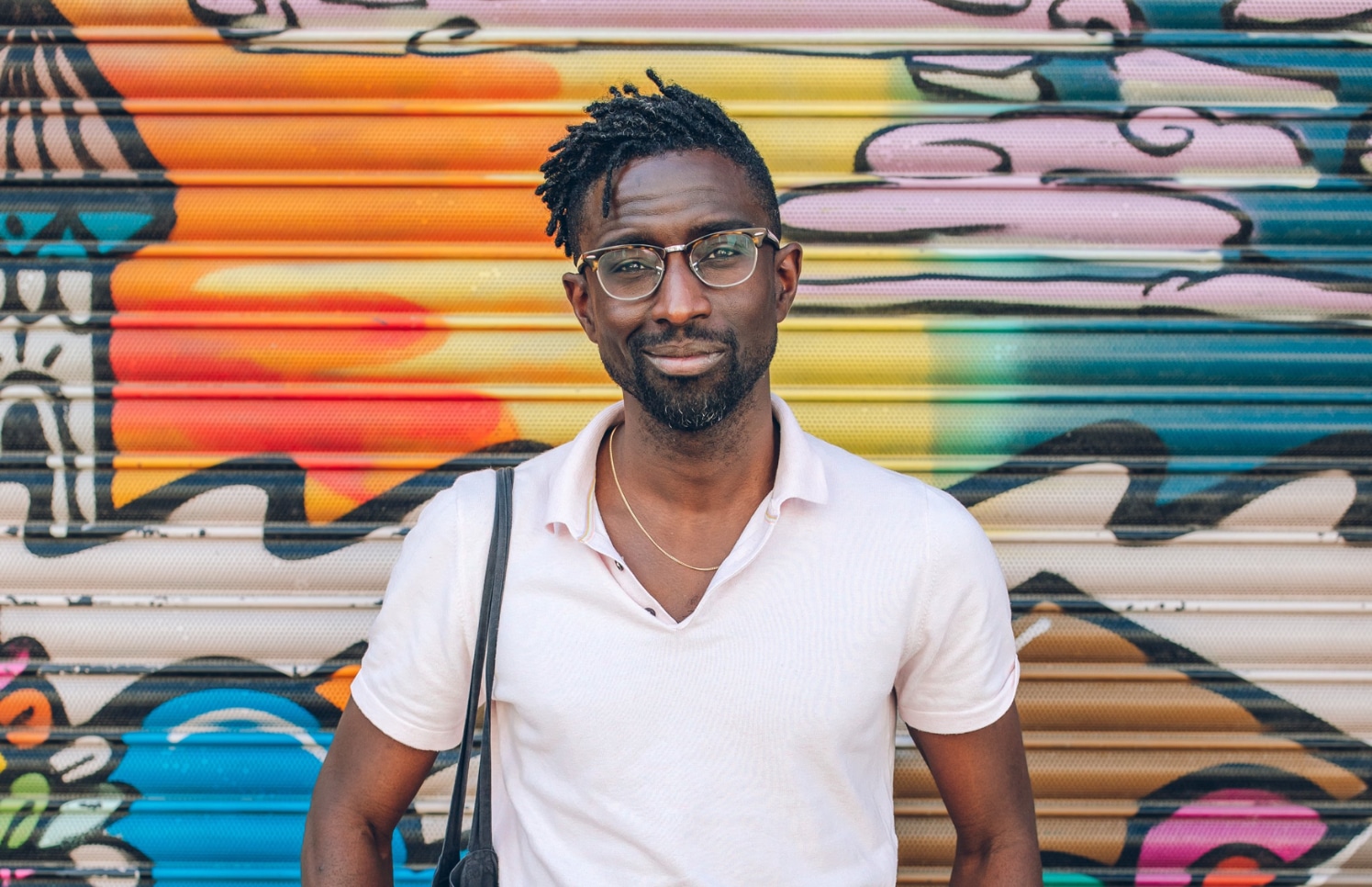
Join Jeffrey Boakye on Friday 17th Novmeber 2-3pm for his online workshop. With his new book, Jeffrey will take us on a journey of nostalgia, joy, music and entrepreneurship through the joys of telling fun, authentic and diverse stories through his newest book Kofi and the Rap Battle Summer. This is a CPD session for teachers to explore how literature and stories can help us address issues of racism in the classroom.
Kaden James recently could up with Jeffrey to discuss his inspiration behind Kofi and the Rap Battle Summer, the complex issues that it addresses and the impact that stories can have when speaking truth to power.
Click here to book your place in Jeffrey Boakye’s online workshop.
Can you tell us more about your new book, “Kofi and the Rap Battle Summer,” and the inspiration behind it?
I wanted to write a book that was magical and enchanting and fantastic, in the truest sense of the word, but set in the kind of environment that I grew up in. So it became an adventure set in a council estate in South London. The book is full of joy, adventure, humour and surprises, underlining how magical any and every childhood can be.
Kofi, his friends and family are full, rounded characters, and Kofi is a hugely energetic main character. That’s the main core of the book, his ups and downs, but all to a backdrop of a nostalgic, Black British experience that I personally know very well.
This book seems to address complex issues faced by the black community, such as encounters with the police and peer pressure. How do you approach these sensitive topics in a way that is both authentic and suitable for young readers?
It’s worth stressing that things like peer pressure and navigating friends/ family are universal themes. This book is not a gritty, urban cautionary tale – far from it – and to this end, I was keen to make sure that the book centres two main things: Joy and Truth.
Joy is easy, and it jumps off every page be it through jokes, discovery, music or just the energy between characters. But the truth can be more difficult. And the truth is that black communities have historically been over-policed and continue to face institutional discrimination. The events that affect Kofi reflect these realities, as they unfortunately would in real life. I don’t overplay it, and I won’t give any spoilers, but these are moments that fuel Kofi’s development as he grows into early adolescence.
“Kofi and the Rap Battle Summer” features the creation of PAPER JAM, a fanzine filled with song lyrics. How do you think creative outlets like fanzines and storytelling can empower young people, especially in diverse and urban environments?
It’s all about the joy of exploring culture and creative expression. Remember, the book is set in 1994 so it’s a kind of pre-digital age. There are lots of handmade solutions to problems and analogue, physical artefacts like cassette tapes, radio and magazines. I remember how exciting magazines were when I was a child, and I wanted to convey that excitement through Kofi and Kelvin’s big project. I also remember transcribing song lyrics myself! So there’s a nice bit of nostalgia there too.
The event is described as a CPD session for teachers focusing on addressing issues of racism in the classroom. How can literature and stories effectively contribute to discussions about racism, and what role do teachers play in facilitating these conversations?
Stories and narratives, plural, widen our scope of understanding, which means that you can never have too many stories. The world is a different place depending on the perspective you experience it from, which is why sharing lived experiences is so crucial. This is what literature and art in general can do so well.
In terms of racism, it’s a simple truth that dominant white perspectives have pushed ‘other’ narratives into the margins. Through my work, I seek to illuminate these voices and highlight stories that we can all learn from. Teachers are best advised to be open and curious to so-called ‘marginalised’ voices. And to realise that young people come from a huge range of experiences too.
The theme for this years YFOS is “Speaking Truth to Power”. What does that phrase mean to you?
Power is blind. Power is centred in itself, unable to see beyond its own remit. Power doesn’t seek to see what it doesn’t know, because it doesn’t need to. So speaking truth to power is about letting power know what it doesn’t see. It’s about revealing truths that can change the way things happen.
Our world is set up in a way that particular identities have power, be it social, economic, ethnic, racial or through other aspects of identity. And the truth is that this comes with inequality and often, discrimination. As the cliché goes, the truth hurts, meaning that power needs to be ready to hear things that make it uncomfortable. Accepting this vulnerability is, ironically, the most powerful thing that any of us who enjoy any kind of privilege can do.
Finally, what advice do you have for aspiring storytellers who want to address social issues through their work?
Speak your truths. Root your work in the fundamental realities of what you know and feel to be true and shape your art around these insights. At the same time, always centre joy. Art can inspire and well as inform. Stories are emotive, entertaining and illuminating.
We learn how to be human through the experiences of characters going through it. So put your characters through trials, certainly, but love them at the same time. It will make you want them to grow and learn – which is the best thing that any story can do.