

When most teachers think about bringing creativity into their lessons, subjects like English or Art immediately spring to mind. But what about Geography? This supposedly “dry” subject of maps, climate data, and physical processes is crying out for a creative revolution, and storytelling might be the key to unlocking its potential.
The Geography Challenge: Facts Without Feeling
In Geography lessons, you’re faced with teaching complex processes like the water cycle, earthquakes, and climate zones to children who may struggle to visualise abstract concepts. Traditional approaches often rely heavily on diagrams and textbooks. While these methods can convey information, they rarely capture imagination or create lasting understanding.
The result? Students who can recite facts but struggle to truly comprehend the dynamic, interconnected systems that shape our world. They memorise that “evaporation leads to condensation,” but they don’t visualise the journey of a water droplet or understand the magnificent cycle that sustains all life on Earth.
Enter the Power of Narrative
Stories have been humanity’s primary learning tool for thousands of years. Our brains are wired to process, retain, and recall information when it’s presented in narrative form. When we transform geographical processes into stories, we’re not just making lessons more engaging; we’re making them more effective.
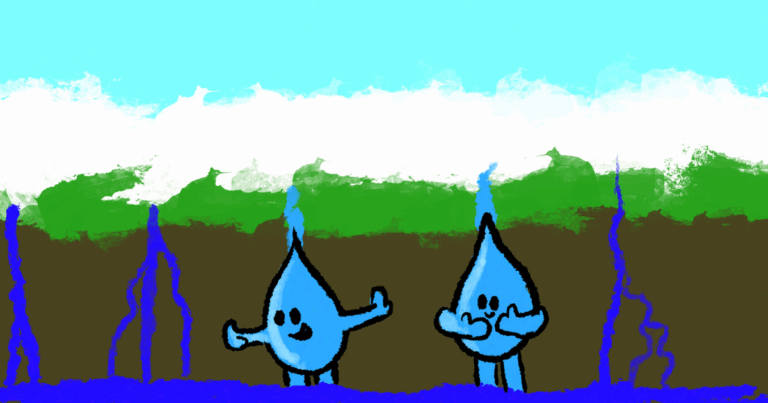
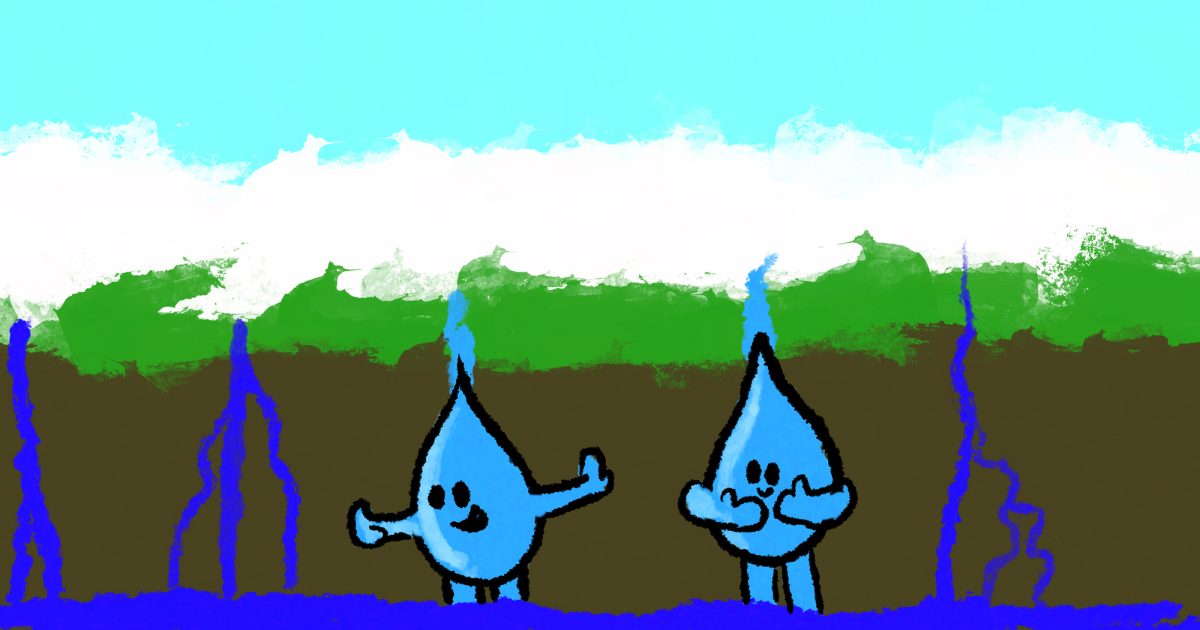
Consider the water cycle. Traditional teaching might show students a circular diagram with arrows and labels. But what if instead, you could take them on an adventure with two little raindrops as they journey from cloud to Earth to stream to ocean and back again?
From Diagram to Drama: The Water Cycle Story
The Stories for Schools Digital Library includes a perfect example of this transformation in action. The water cycle story doesn’t simply explain evaporation and condensation, it brings these processes to life through the adventures of two raindrop friends.
Children learn that evaporation occurs when water gets hot, but they experience it through the raindrops’ transformation. They can see that water vapour condenses to form clouds, but they understand it through the raindrops huddling together for warmth in the cold sky.
With a subplot that reinforces that natural processes create variety and that differences make the world more interesting, not less perfect, this story weaves scientific accuracy with emotional engagement.
The Cognitive Science Behind Story-Based Learning
This approach works because it activates multiple areas of the brain simultaneously. When children listen to the raindrop story, rather than just processing geographical information, they’re engaging their emotional centres, their imagination, and their personal experiences.
The narrative structure provides a framework that makes the scientific sequence logical and memorable. Instead of trying to remember disconnected facts about the water cycle, children follow a coherent journey; they can visualise the process because they’ve experienced it alongside characters they care about.
Research consistently shows that information embedded in stories is recalled more accurately and for longer periods than information presented in abstract or purely factual formats. When students need to explain the water cycle weeks later, they don’t struggle to remember diagrams, they retell the adventure of their raindrop friends.
Beyond the Water Cycle: Geography’s Storytelling Potential
The applications extend far beyond the water cycle.
Imagine teaching volcanic eruptions through the tale of Earth’s fiery core finding its voice, or consider bringing climate zones to life through stories of travellers discovering how different parts of our planet create entirely different ways of life.
Each geographical concept contains inherent drama, conflict, and resolution, all the elements that make compelling stories. The challenge isn’t finding stories within Geography; it’s recognising that Geography has always been full of stories waiting to be told.
The key to success is finding high-quality educational stories that are professionally crafted by those who understand both storytelling techniques and curriculum requirements.
Experience the Stories for Schools Difference
Ready to transform your Geography lessons from mundane to magical?
Stories for Schools has already done the hard work for you. Our Digital Library contains over 200 professionally crafted story videos that bring curriculum subjects to life.
Each story in our collection is:
- Professionally narrated by skilled storytellers who know how to capture young imaginations.
- Curriculum aligned to meet your teaching objectives without sacrificing engagement.
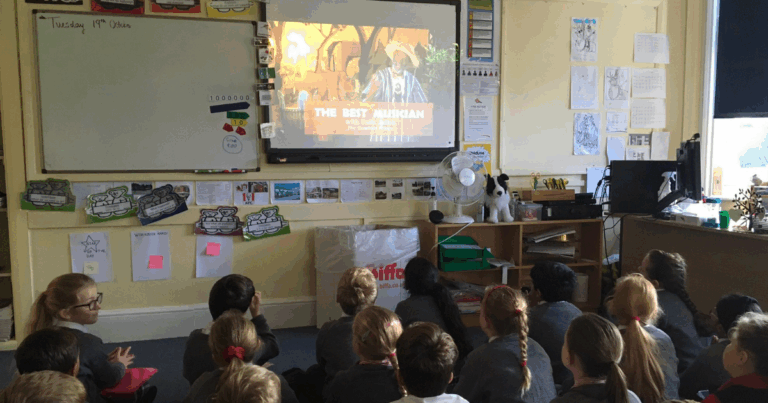
- Ready to use with no preparation required. Simply press play and watch your students become absorbed in learning.
- Accompanied by resources including full transcripts and printable illustrations for extended activities.
Our water cycle story is just one example of how we transform abstract concepts into emotional journeys. From the moment those two little raindrops begin their adventure, your students will be hooked. They’ll learn every stage of the water cycle without realising they’re absorbing complex scientific processes.
But why take our word for it? We’re so confident in the power of our approach that we’re offering you a free trial resource to experience the transformation firsthand.
Don’t let another term pass with students struggling to connect with abstract concepts. The Earth’s stories are waiting to be told, and your students are ready to listen.