

Blog written by Sarah Bennett
Consigned to the shadows by the overbearing legends of her more famous, more talented, more deserving sisters: the lesser-known Brontë sister- Anne, the sister we know of but not really about.
From the swirling mists and strange intensity of the Yorkshire Moors we bring you Anne, brought forth by our own Brontë expert: Sue Newby, Learning Officer at the Brontë Parsonage Museum in Haworth. She will be lifting Anne out from the darkness and into the light- what have we been missing about the relegated Brontë sister? Did she deserve such status? Why is now Anne’s time? During Sue Newby’s FREE talk Amid the Brave and Strong at Yorkshire Festival of Story on Sunday 23rd August @ 7:00 pm – 8:00 pm you can find out. Grab your free spot whilst tickets are still available.
But don’t stop there! We have a fantastic smorgasbord of maverick, visionary women as feminist food for thought on 2nd August. Sue is on Breakfast with Yorkshire Women from 10:00 am – 11:00 am, alongside Joanne Harris MBE and Dame Jenni Murray, presenter of BBC Radio 4’s Woman’s Hour. You can book here.
We caught up with Sue to hear about how she became spellbound by the Brontes, and what we’ve all been missing about the lesser-known Anne.
Could you tell us a little about your journey into discovering the Brontë sisters and what has drew you into not only their stories but those of other Yorkshire women?

I’d grown up watching the old Hollywood adaptations of Jane Eyre and Wuthering Heights on Sunday afternoon tv – even now, Joan Fontain’s pensive face reminds me of the smell of Sunday lunch. These films took me to another place that was a million miles away from 70s suburbia – all swirling mists, strange intensity, and an atmosphere so mysteriously evocative I still can’t really put it into words . The wonderful dramatisation of the Brontes’ lives, The Brontes of Haworth hit the small screen when I was 13; the recreation of all that angst and genius in the windswept Parsonage at the edge of the moors didn’t disappoint. It was around the time I first read Jane Eyre (Wuthering Heights came a little later) and I was well and truly hooked – I loved how the family seemed to be ordinary and extraordinary at the same time, how their lives explained the incredible achievement of their writing, but also didn’t.
To be living in Haworth and working in that same Parsonage everyday is still a little unbelievable to me- I’ve been here for 15 years now and the magic has never faded. I feel privileged as the Learning Officer at the museum to be in a position to communicate my enthusiasm for the Brontes and their achievements and pass on my knowledge – such as it is. I had to learn to approach their story from quite a different place though, in some ways to try and get past the myths and my own personal responses. I had to learn more about the facts, not just of their lives but of the world they were living in and how other people had responded to their work over time, and why those responses changed. It is absolutely true to say, everything I have learned has only made me admire them and their achievements all the more, and that admiration and affection just carries on growing.
On 2nd August, you’ll be on Breakfast with Yorkshire Women. Which bygone Yorkshire women would you have at your breakfast table, and why?
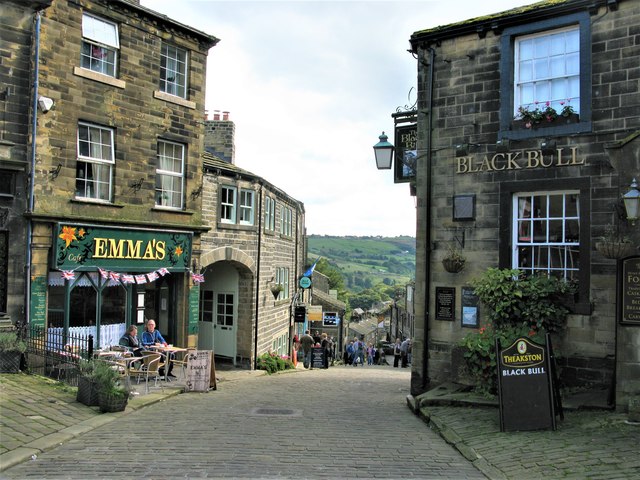
That’s the reason the Brontes would definitely be my choice of bygone Yorkshire women to have at my breakfast table! How many questions could be answered over the coffee and full English– as soon as they spoke, I’d know the answer to one question that has bedevilled directors of their bio-pics down the ages… accent – Irish or Yorkshire?? Probably not the RP of earlier versions! What did they really think of Haworth? (And each other’s writing, but I might have to get them separately for that one…) I’ve always thought, blessed with some magical power of traveling through time and space, where I’d most like to go, would be to an evening in the Bronte parsonage, maybe around 1842, and listen to the sisters conversations as they paced round and round that dining room table. But failing that – how amazing to bring them to our (very strange) present! I’d want to know what they think about everything… Twitter, tourists up Main Street, women’s sexual independence. Croissants. I’d love to blow their minds with a mobile phone, point to the sky and show them a plane. But most of all I’d like to take them back up the hill to the Parsonage, (after the croissants) show them the visitors from all over the world (one day, one day) who have got in one of those planes and come thousands of miles just to see where they lived. To look at their little books, their little shoes their kitchen chairs and wonder at it all. And most importantly I’d like to take them to the museum shop and let them see for themselves how well loved their books are, 200 years after they were born.
I should lay my cards on the table here really and admit that Anne has never been the Bronte I admire most – at least as a writer. I have tended to agree with what’s probably been the majority opinion down the years, that her writing doesn’t quite have the intensity of originality and imagination of her two more famous sisters. But I have come to see qualities in Anne and her writing that I really admire and certainly don’t agree that her work deserves to have been marginalised in the way it has, and for her to have been dismissed as a minor talent, only of real interest because of who she happened to be related to. Though this was often what critics in the past have argued, her work has been re-appraised in recent years, and she is now considered to have been a writer more interested in realism than her sisters, and in portraying the world truthfully, as she saw it. In some ways Anne was also a more radical writer and one with a powerful social message; brave in the way she rejected the hypocrisy of her day especially in its treatment of women.
So I’m very interested in Anne’s life experiences and what might have set her on a different path to Charlotte and Emily as a writer. Also, where did this dismissive attitude to Anne and her writing come from, and why is it only now we’re appreciating her true worth?
What do you think would be Anne’s take on our modern world?
I think Anne’s take on our modern world would be a mix of incredulity, admiration and dismay. I think she would be amazed by the increases in knowledge, including technical and scientific – how could she not be impressed by access to talks through zoom? But also appalled at the destruction of nature – climate change, loss of species, and the general mess we’re making of the planet. I think she would be heartened by advances in justice and equality, especially around gender and race, but recognise we have a way yet to go. She would strongly approve of all children (in this country) having access to free education but would be angered by the fact that school is the only way for many children to get enough to eat.
I think she’d be quite fascinated by TV – probably preferring David Attenborough to the Kardashians, bemused by Love Island, and wondering when there’s finally going to be another adaptation of The Tennant of Wildfell Hall…
She would love the NHS and I suspect would have coped with the recent lockdown with more patience and grace than her sisters. She is the only one I could imagine making masks…!
BOOK YOUR FREE PLACE ON AMID THE BRAVE AND THE STRONG HERE