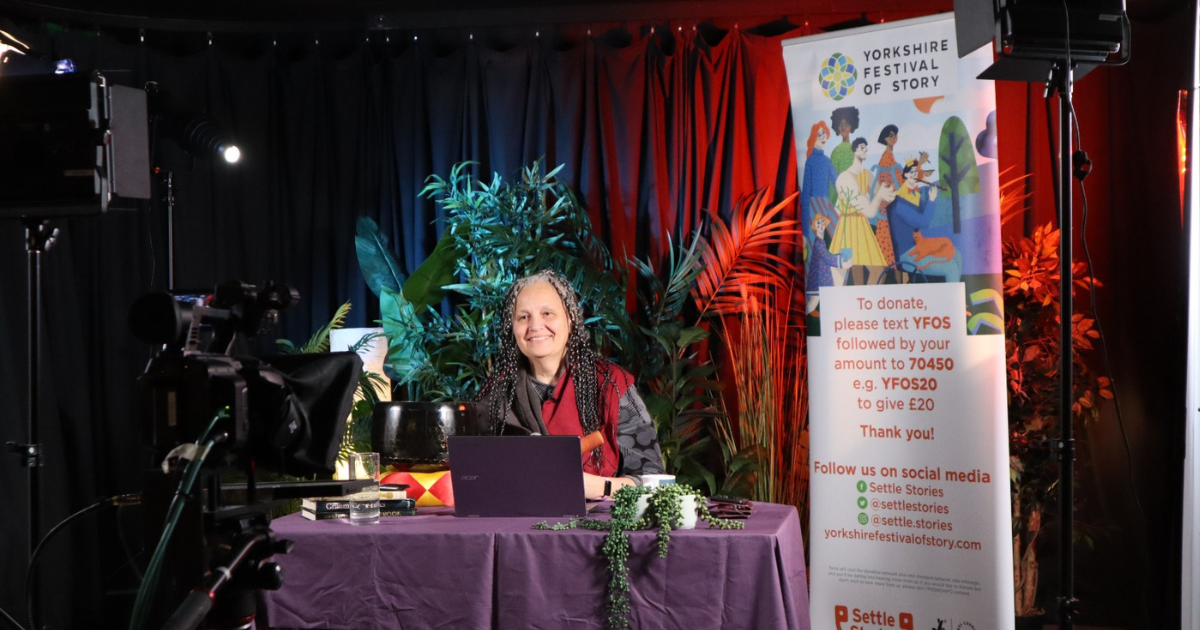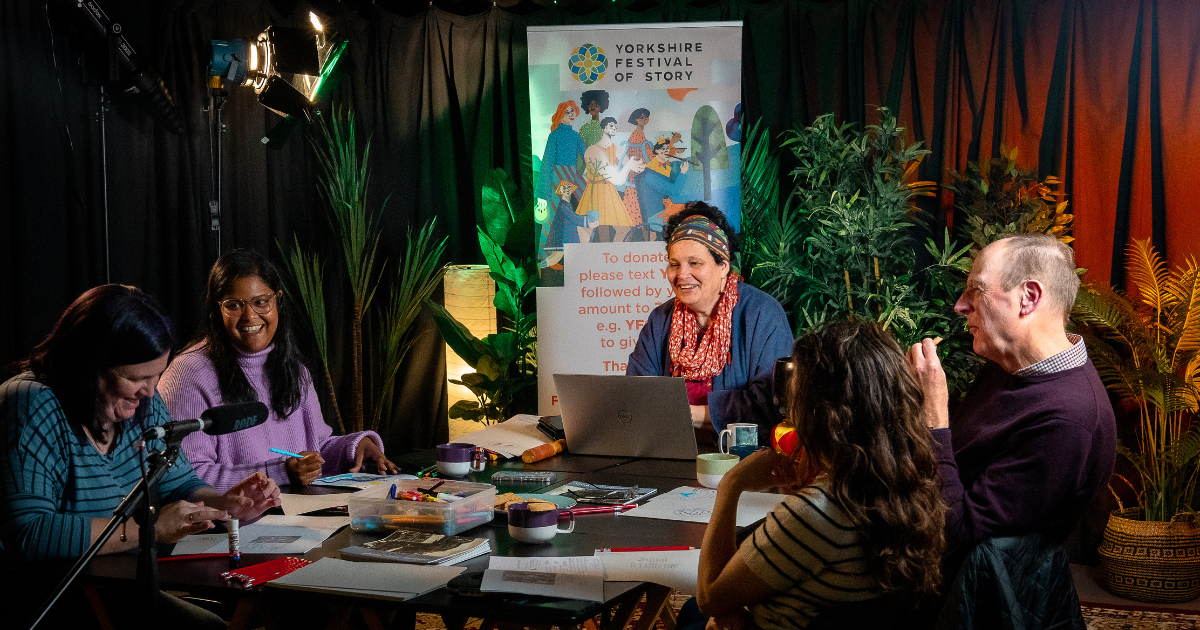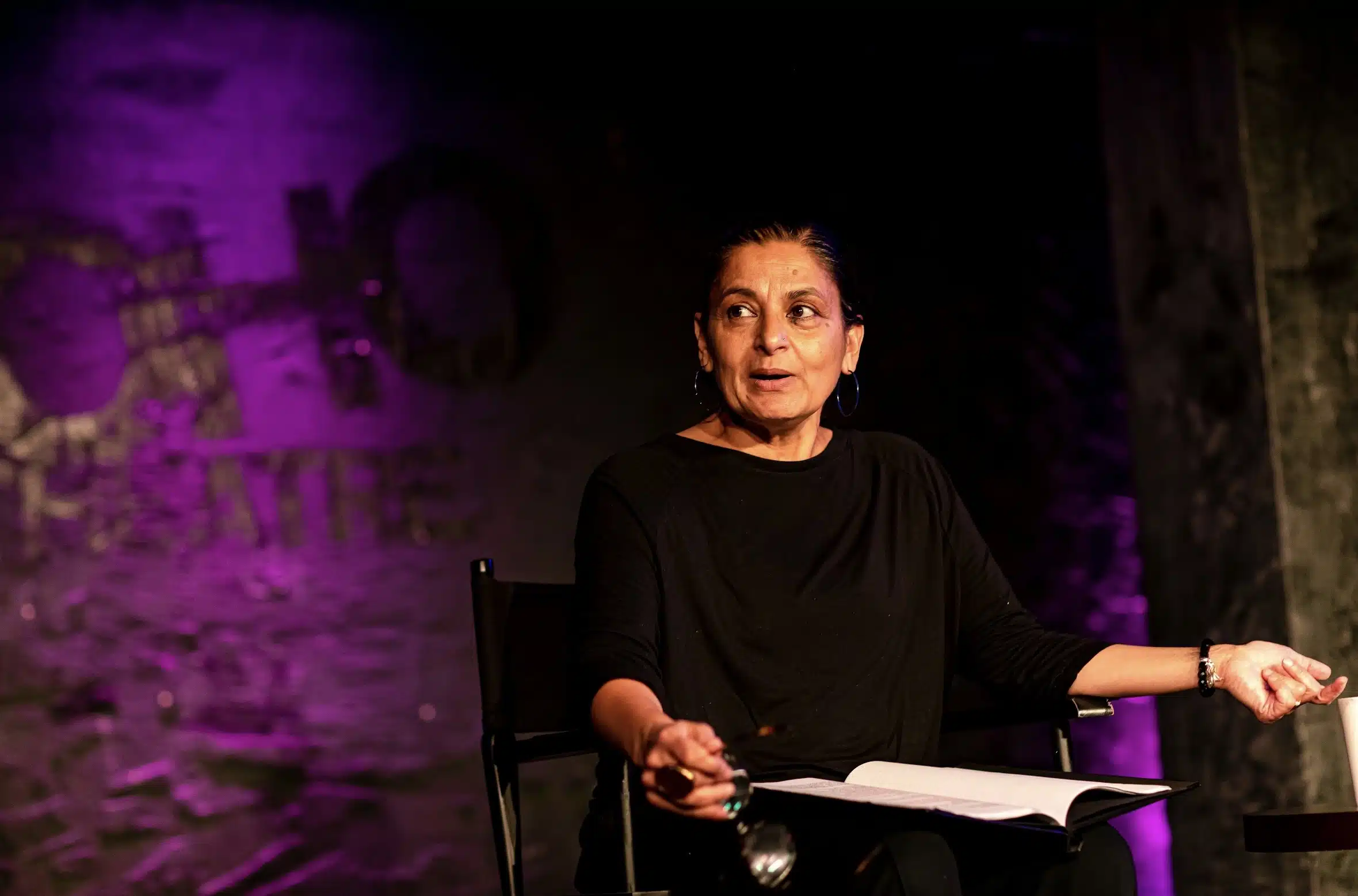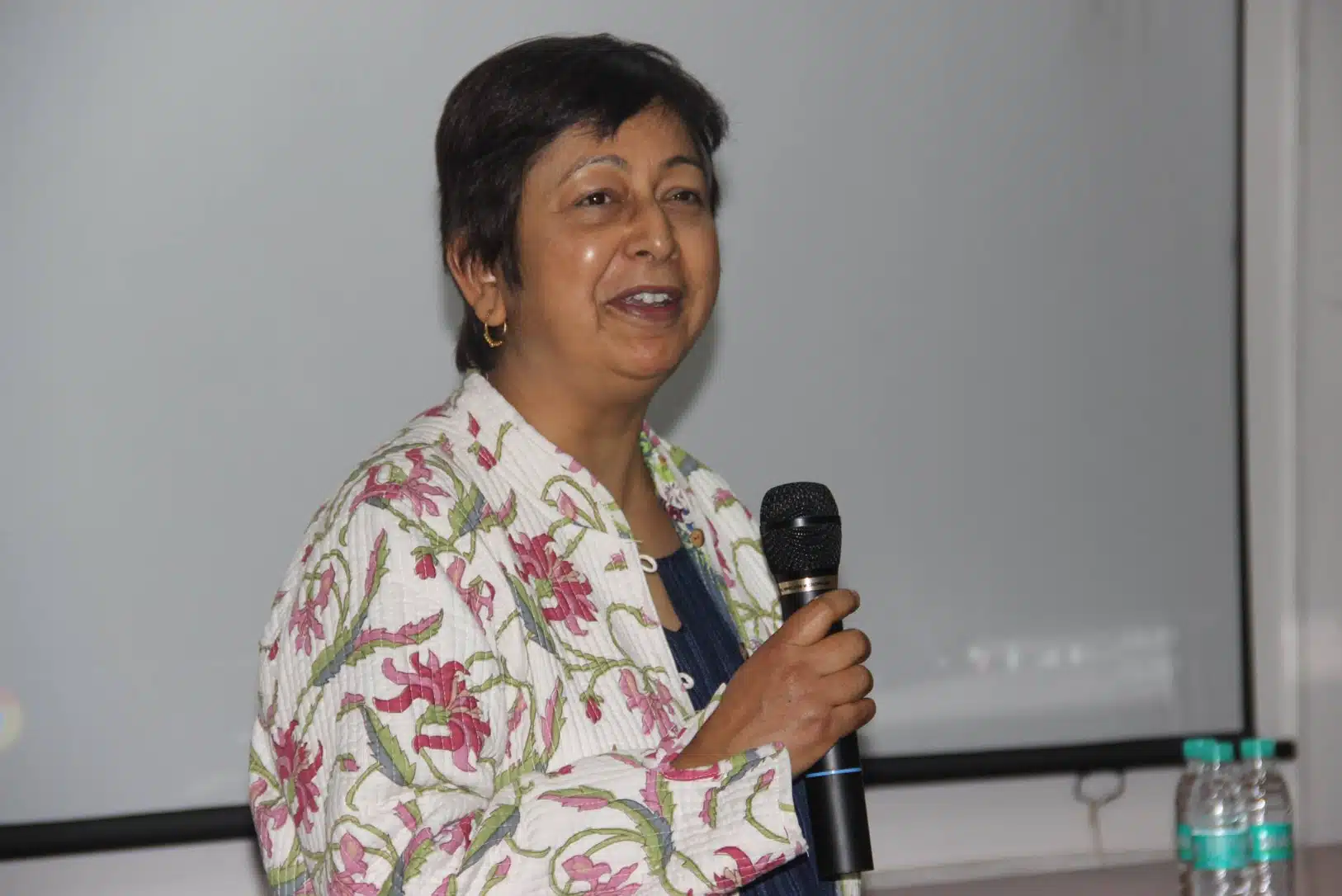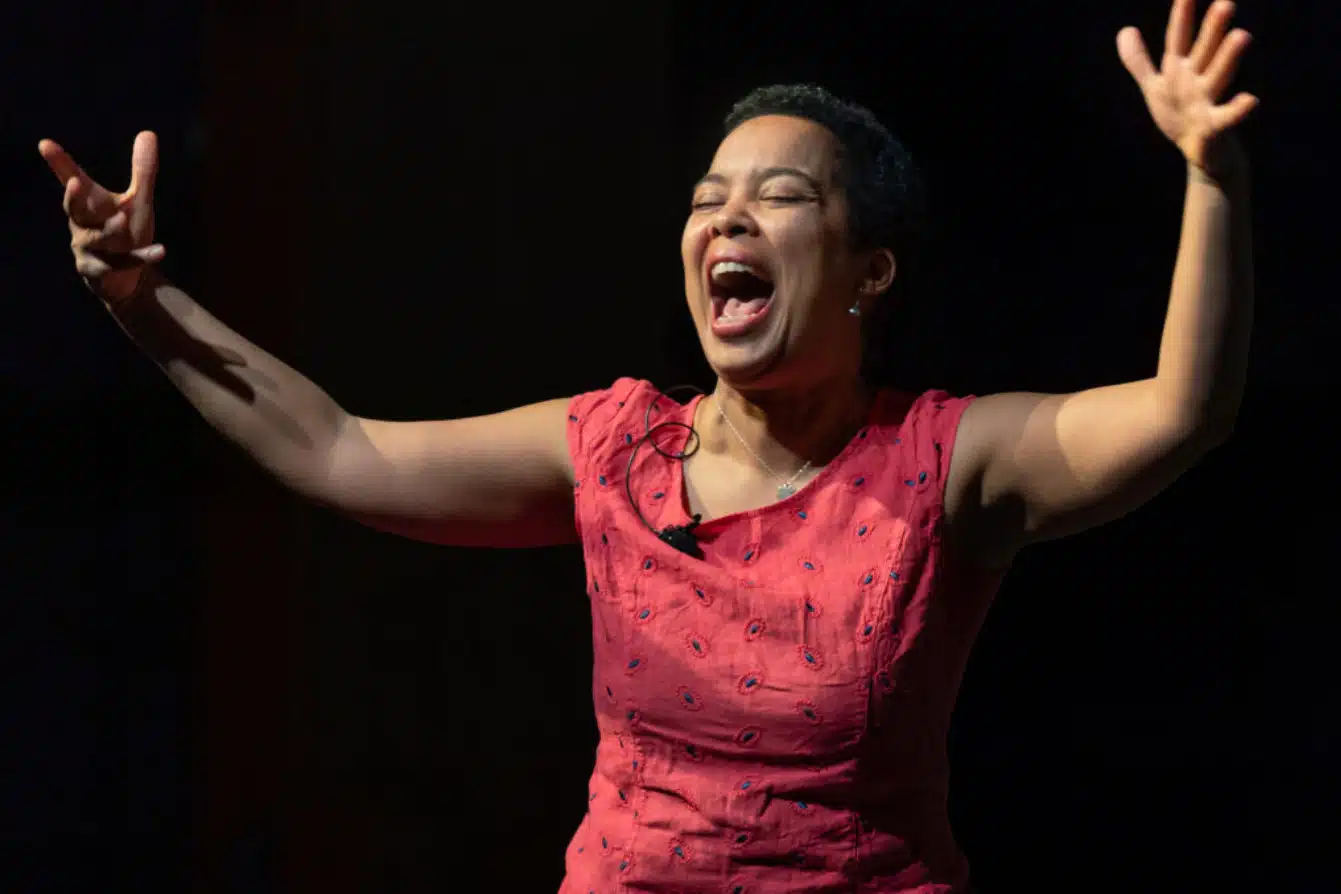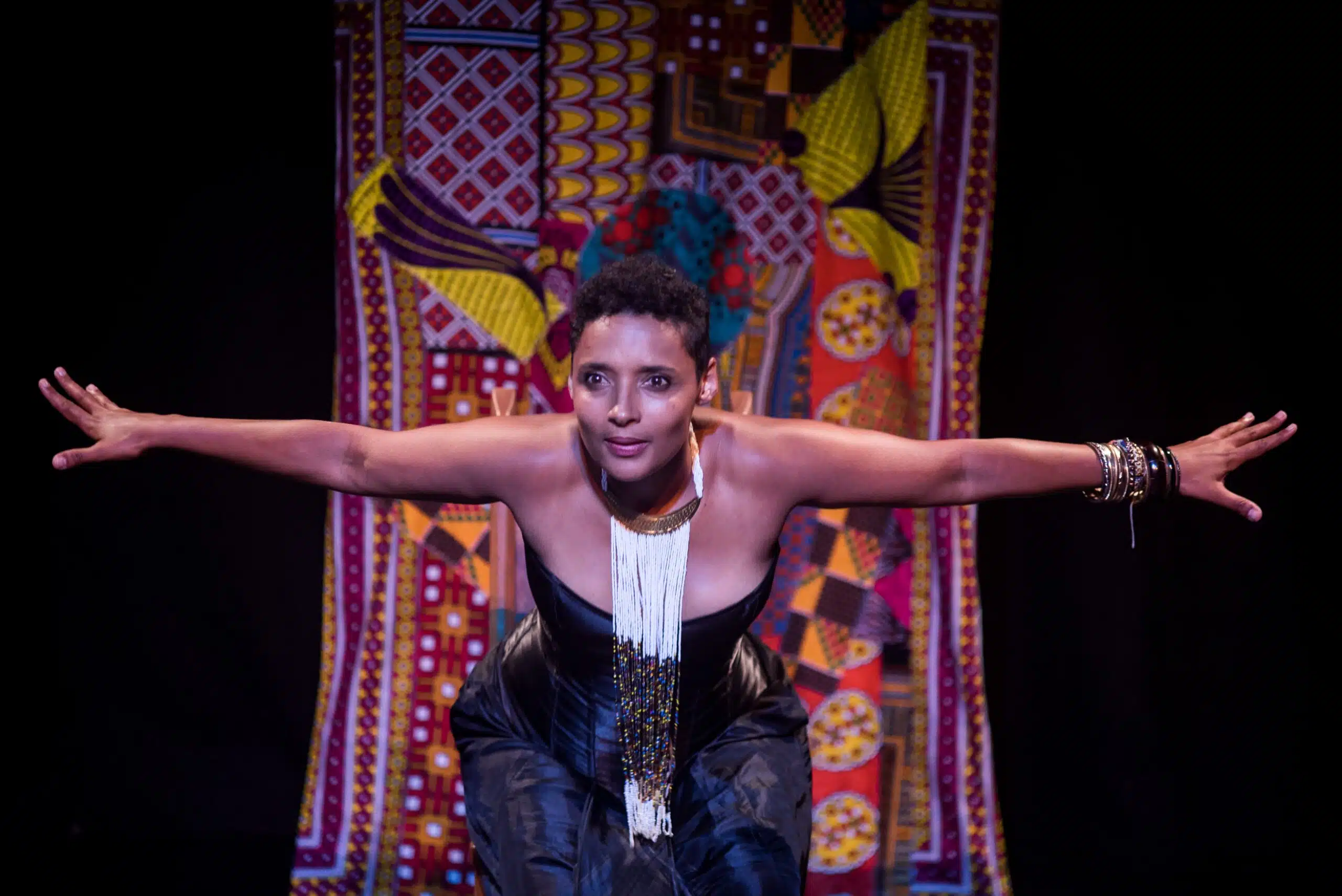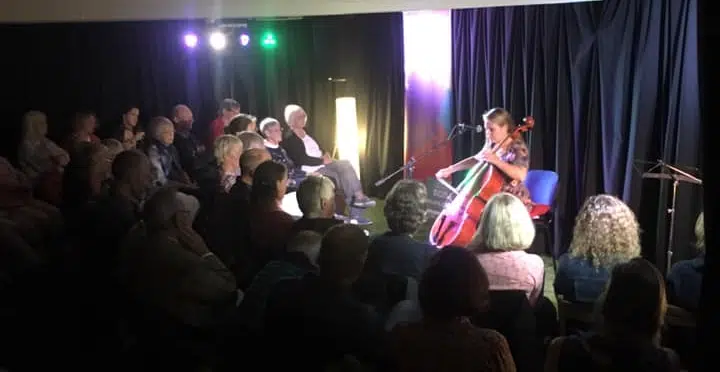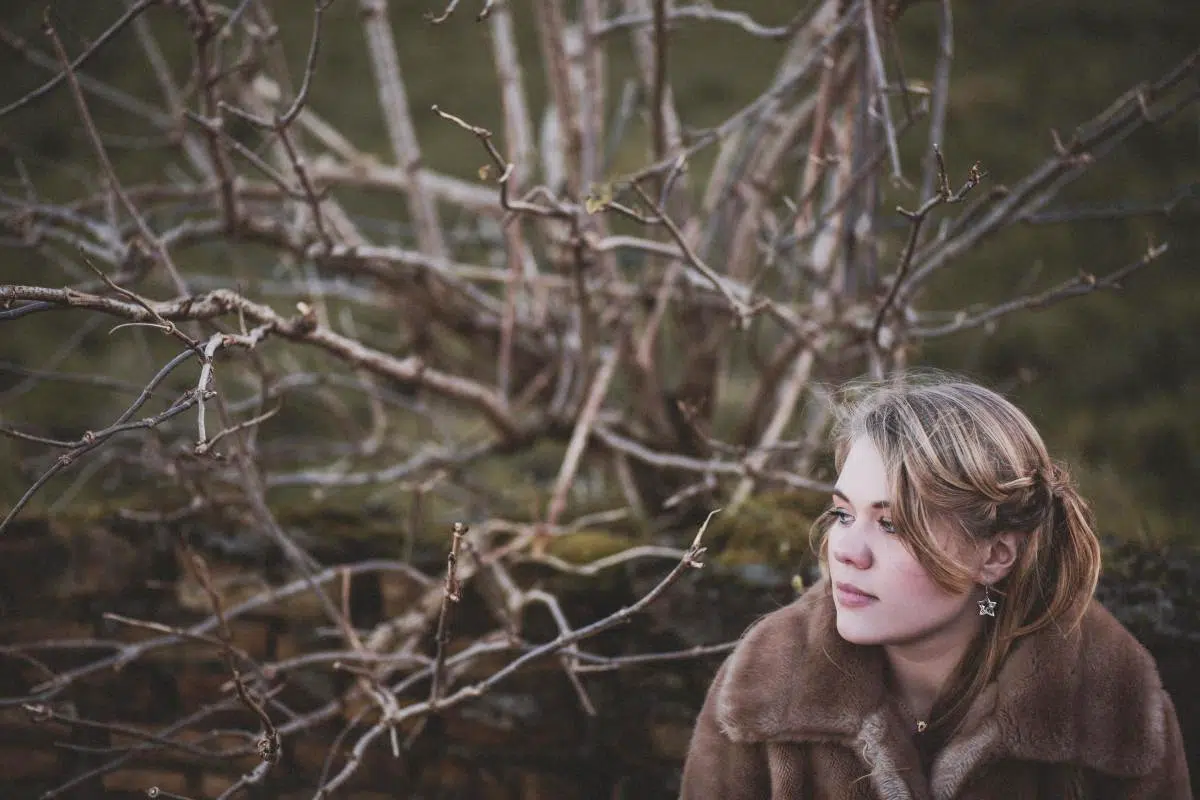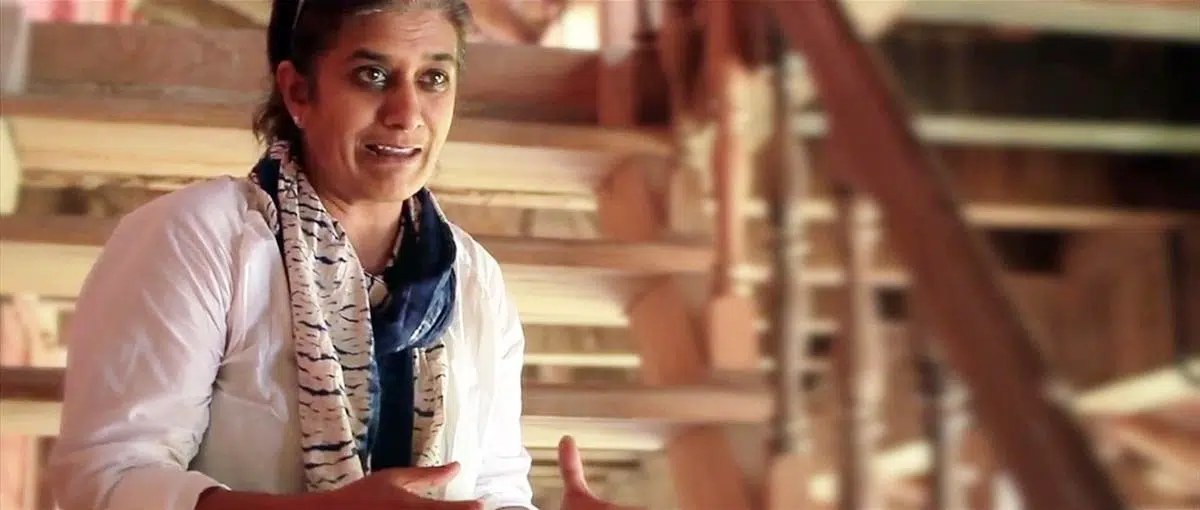

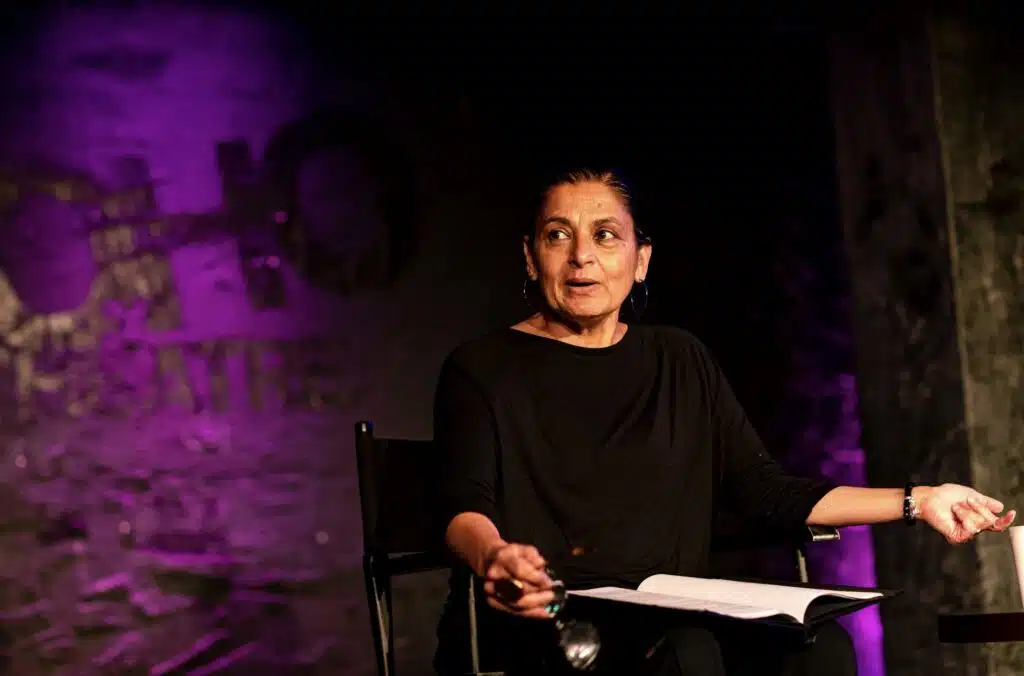
On 15th November, Sudhar Buchar is gracing the Yorkshire Festival of Story stage with her one-woman show, ‘Evening Conversations.’
Gurpreet Atwal spoke to Sudhar to pick her brains and find out more about Sudhar and the creation of Evening Conversations.
Firstly, could you tell us a little bit about the show that you have put together for the
Yorkshire Festival of Story?
‘Evening Conversations’ is a solo show, written and performed by me. It is literally inspired by my banter and DMCs (deep meaningful conversations) with my sons. My older son, Samar, his name means ‘Evening Conversation’ in Arabic, so I thought that was an apt title.
It’s a meditation on my ‘squeezed middle’ life as a middle-aged, middle-class, multicultural mother of dual heritage (Indian secular Hindu/Muslim Pakistani), fiercely British, millennial sons. I invite them to ‘crack open a cold one’ with me and share their views on life. Their life in leafy Wimbledon is a far cry from my cross-continental immigrant childhood and their sense of identity and cultural/genetic inheritance made me examine my own journey.
I wanted to share our entertaining and piercing conversations and a gentle memoir of my life. And it’s great to ‘play’ them!! Payback time! As they are always telling me, ‘You’re the one with the identity crisis mum, not us!’ NOT TRUE OF COURSE.
This year’s event is centred around the theme ‘Speaking Truth to Power’. What role do you believe stories can play in helping to change the narrative and achieve justice in our world?
I think stories are important as empathy bridges, inviting us to step into the shoes of others and experience lives and situations different to ours and discover a shared humanity. There is so much injustice and inequality in the world and it’s easy to get overwhelmed and paralysed and feel that you can’t make a difference.
I believe stories can bear witness to and illuminate the complexity of situations from many points of view, and spur people to action, however big or small. There is as much value in everyday gestures of kindness and connection, as well as global movements of change. The artist Anna Deavere Smith, who I
admire hugely, puts it well in the verbatim work that she does. She says that she is not looking for ‘solutions’ to social problems but examining the ‘processes’ of the problems. ‘I am first looking for the humanness inside the problems of the crises. The spoken word is evidence of the humanness. Perhaps the solutions come somewhere further down the road.’
What types of stories do you like to tell as a storyteller, and what types of stories do you like to hear?
I am drawn to the extraordinary in the ordinary, the poetry of the everyday and the plurality/contradictions of people. I guess the type of stories I tell have that running through it, so I look at the big canvas through the window of small lives. For example, my most popular play ‘Child of the Divide’ was the story of a lost Hindu boy and four other children experiencing the partition of India.
I focus on their narratives and how political events not of their making, changed their destinies. I like to read memoirs and go to theatre that touches the heart and isn’t cerebral and intellectual first. Recent examples are ‘The Architect’, by Actors Touring Company, which commemorated the anniversary of Steven Lawrence’s death through a gentle immersive experience of hope and ‘Playlist for the Revolution’ at the Bush which illuminated the situation in Hong Kong through a touching love story.
What do you enjoy most about being a storyteller and what inspired you to pursue this path?
I pursued this path completely by accident and I believe in synchronicity. I was studying maths and sociology when I encountered Tara Arts (now Tara Theatre) and joining Tara changed my life. Storytelling for me began from connecting with other young British Asian people going through life in the UK as children of the Empire and finding our own narratives that helped us make sense of our lives.
I am really enjoying doing ‘Evening Conversations’ as it is a deeply personal work and being alone on stage, connecting with the audience in a simple, unadorned way is special. It’s a rare space where I can bring my whole self to the encounter and inspire people to laugh, maybe shed a tear, and reflect on their own lives.
You founded your current theatre company with the continuing aim of creating more diversity and representation in the arts. How has the arts industry changed since you first started out and what more can it still do in terms of diversifying the narrative of who and what we see in the mainstream media?
I founded Bhuchar Boulevard after running Tamasha for 25 years and it is a place for renewal, reflection and collaboration with arts and non-arts partners with projects that start from a personal passion. The arts industry is always changing, and this is a huge question that doesn’t have simple answers. I am seen as a trailblazer by many people and it’s great to see so many people who have come through Tamasha and Bhuchar Boulevard projects and it has launched their own careers and journeys.
There are so many more people and stories in the mainstream now than when I first began, but equally I see a lot of erasure and institutional amnesia from the industry. It’s important to capture all the work that has already happened and build a collective narrative of where we have come from and achieved as South Asian and other global majority artists. Bhuchar Boulevard is passionate about the creation of a South Asian archive which we hope to see come to fruition.
How would you describe your storytelling style and has it changed over time?
I never think of what my storytelling ‘style’ is, but others are better at articulating that. I am flattered when my play ‘My Name is…’ was called ‘quiet and cumulative’ by Bruce Young, who produced the radio version or when writer Carl Miller called my ‘Touchstone Tales’ cycle of stories ‘epic in miniature’. My practice and style evolve but being curious about and capturing the stories of ordinary people lie at the heart of all my work.
As an actor and writer, you have worked on various projects. However, during this time, has there been anything in particular that has meant the most to you and that you have felt the proudest of?
There are so many projects that stand out and I don’t really like to choose one or two. ‘Child of the Divide’ is special as my children inspired that too and ‘Evening Conversations’ has surprised and thrilled me as it has touched people across ages and cultures. I want to keep doing it for the moment.
As an actor, I am grateful to endure and carry on working and increasingly use my other languages in my work too. However, the triple whammy of age, race and culture is challenging in the scarcity of parts and work available to us and it’s important to acknowledge that.
Could you share with us a little bit about any projects you are either working on or hope to bring to fruition in the future?
I am adapting Sita Brahmachari’s multi award-winning debut novel ‘Artichoke Hearts’ through exploring the book in creative encounters with children from Years 6 to Year 8 and hope to have its premier in 2025. As an actor, I am a guest character in two episodes of a new Amazon Prime series called ‘EXPATS’, directed by Lulu Wang, and starring Nicole Kidman and Sarayu Blue. ‘EXPATS’ opened at the Toronto Film Festival and I hope it will be on our screens in early 2024.
What is one piece of advice that someone has given you which you believe would inspire and help others along their journeys towards becoming storytellers?
The advice that I try to remember most is that the only thing that makes you an artist is your unique relationship to the actual work. So ‘write the play only you can write’ or ‘bring your full self into the room’ as an actor is the only thing that endures. The rest is the noise of an industry that can erode you and wear you down. ‘Evening Conversations’ is my way of coming back home to myself.