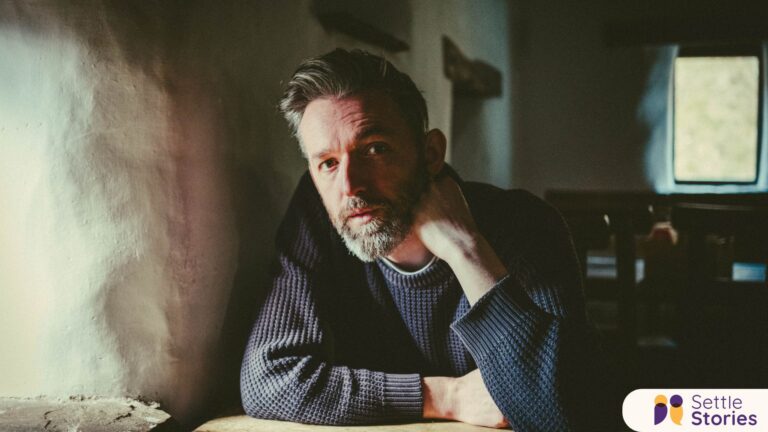


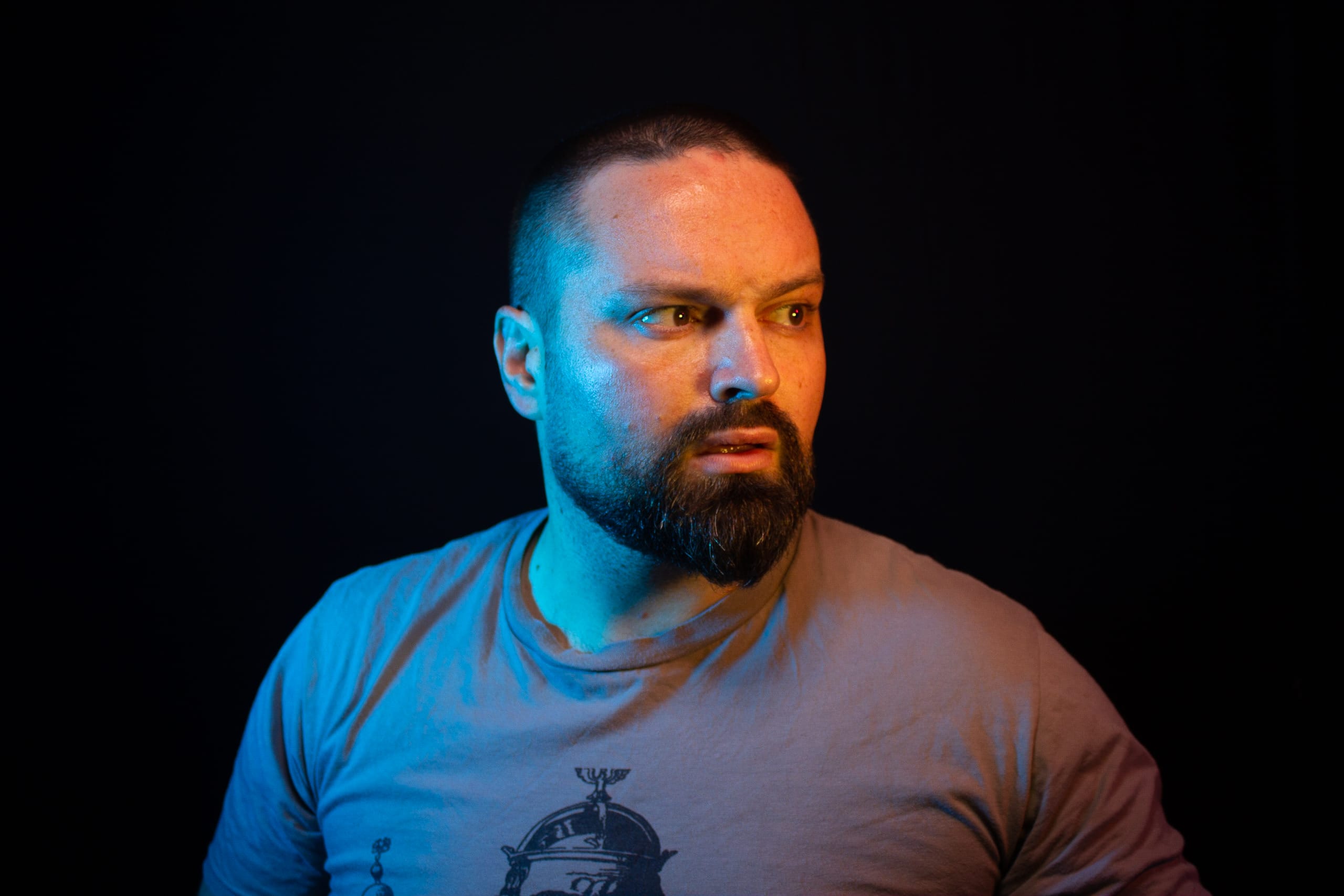
Join Jon Buckeridge for The Beowulf Podcast each night for FREE at 9pm during this year’s festival. Be ready to hear an incredible tale that is one of the oldest surviving sagas in the English language. Beowulf may have a history stretching back over a thousand years, but it has never stopped fascinating audiences. This reimagined adaptation will bring Beowulf back to life for a brand-new age.
Our very own Mollie Parker recently caught up with Jon to give us an insight on his experiences as a storyteller, why festivals like the Yorkshire Festival of Story are important and tell us more about what we can expect from The Beowulf Podcast.
Access the first episode of The Beowulf Podcast here. The rest of the episodes can be found here on the Festival Programme. All episodes are FREE to all.
Let’s hear from Jon:
What made you want to pursue your chosen career? Was there a certain person that inspired you?
As a child I always enjoyed stories. My dad is a prodigious reader, and he would read stories to us in the evening. He was great, and he could do all the voices. I recently heard him reading stories to my nieces and despite my years of training and experience, he’s still the absolute master.
That love of stories was translated into training as an actor, and a really exciting career touring all over the world, but I struggled with the idea that theatre is often perceived to be the province of those with a middle-class background and salary and that lots of people consider that it’s just “not for them”. I think the arts are for everyone. A good story is one of the most culture-crossing things in the world, so I decided to pursue stripped-back, solo storytelling that could go anywhere and reach anyone. Since then, I haven’t looked back.
In 2014 you set up Parable Arts to explore the art of storytelling. Since then, have you noticed any changes, or have you come to learn new things about the ways stories are told?
Goodness me, how long have you got? I don’t think I’ll ever stop learning, and that’s one of the most wonderful gifts in life; a pursuit you’ll always be growing in. I will say that in my more arrogant moments of pure self-delusion, I have been guilty of feeling like I’ve really mastered a certain moment or a certain style. And then, I’ll see another storyteller tell a tale in a way that blows my socks off and makes me think “I have so much more to learn!”.
It happened to me recently at a storytelling festival where I saw Xanthe Gresham, Nell Phoenix and Tamar Williams. They just smashed their stories out of the park and inspired me in whole new ways. I’m not much of a hat wearer, but if I were it would have been taken off to all of them.
I think for storytellers there are as many lessons to learn as there are audiences to work with. Over the last decade I’ve really learned more and more about connection with a crowd and the way that a story – when it’s done well and the storyteller really knows their stuff – isn’t told, it’s shared.
Can you give readers a hint as to what they can expect from your podcast?
It’s hard to spoil a story that’s over a thousand years old… but I still think there are some surprises for the audience here. Alongside the monsters and mayhem, there’s a pretty epic journey for Beowulf and the people who shape him into the man he becomes.
How did you decide that the story of Beowulf would be at the centre of your podcast?
It’s interesting, the story actually took me on a very different journey than I expected. Initially, I was thinking about the idea of speaking truth to power, and what happens when a ruler who came in as the voice of change becomes the elder statesman.
In the writing though, there were other directions that really opened up for exploration, and for me, a huge part becomes motherhood, and the depth of feeling a mother has for her child. It certainly isn’t what you naturally associate with Beowulf, but it’s all there in the story.
What three words would you use to describe The Beowulf Podcast?
Epic. Ancient. Awesome.
Why do you think festivals such as the Yorkshire Festival of Story are important? What role do they play? What drew you to want to perform at the Yorkshire Festival of Story?
I have to say, YFOS is one of the highlights of my career. The sheer breadth of creativity on offer, and the amazing accessibility of the programme are outstanding. I think for a lot of people this sort of festival will be their introduction to the world of stories and their transformative power. You can’t put a price on an experience as valuable as that.
Is there a certain story that interests you that you would like to build a show around in the future?
Ah, the great unwritten story? I have loads of them! The Grettis saga is one that I’ve been fascinated by for a while. I’d love to tackle the Iliad too.
The one I’ve been working on for a while is called Kingmaker. It looks at the biblical characters of Saul and David, as the first two great kings, looking at Samuel as the man who put them both on the throne and saw the flawed figures they both became. Something is fascinating about that story, and it’s definitely one that’s got relevance and resonance down the ages.
If you could only read one book for the rest of your life, what would it be? And why would you choose this book?
Yeeeesh, that’s hard. As a Christian it’s obviously the Bible, but if we take that as given… can I have the whole LotR series? That’s definitely the book(s) I keep coming back to more regularly than any other and in many ways, it’s the progenitor of the Fantasy genre, which is where I spend most of my happy reading hours.
Access the first episode of The Beowulf Podcast here. The rest of the episodes can be found here on the Festival Programme. All episodes are FREE to all.